
This June, as we recognize Men’s Health Month, we’re taking the opportunity to talk about something that affects all of us: how we care for ourselves and one another.

When it comes to men’s health, it’s easy to focus on screenings, annual checkups, and doctor’s appointments. Those things are important, but health is also built through everyday choices: taking a walk, getting enough sleep, staying connected to family and friends, paying attention when something doesn’t feel right, and making time to seek care when it’s needed.
In this issue, we explore men’s health from several perspectives. You’ll hear from Dr. Kaplan, a Sonoma Urologist, on the importance of speaking up and seeking care. We also share reflections from Dr. Patrick Okolo, our Chief Medical Officer on prevention, stress, digestive health, and what it means to build health through everyday choices. You’ll also meet one of our community partners, Adobe Drugs, and learn more about how partnerships across Sonoma Valley help make care more connected and accessible.
At Sonoma Valley Hospital, we are fortunate to be part of a community that values health, wellness, and caring for one another. Whether it’s scheduling a screening, talking with a physician, staying active, or checking in with someone you care about, small steps can make a meaningful difference.
This month, I encourage you to make your health a priority and to remind the people you care about to do the same.
Warmly,
Kelley Kaiser
Chief Executive Officer
Men’s Health Month: Building Health Before You Need Healthcare
Reflections from Dr. Patrick Okolo, Chief Medical Officer at Sonoma Valley Hospital on prevention, stress, digestive health, and the everyday choices that shape long-term wellbeing.
Men’s Health Month often brings reminders about screenings and annual checkups. Those conversations matter, but according to Dr. Patrick Okolo, Chief Medical Officer at Sonoma Valley Hospital and a gastroenterologist and interventional endoscopist, long-term health starts long before an appointment is ever scheduled.
For Dr. Okolo, health is built through the choices people make every day and the conversations they are willing to have with themselves and with others. “Screenings matter — I’ll never minimize that — but real health is built in the ordinary moments,” he said.
“It’s what you eat on a Tuesday when nobody’s watching. It’s whether you go for a walk after dinner or sit down in front of a screen. It’s whether you call a friend when something is weighing on you, or whether you carry it alone until it becomes something heavier.”
For men in Sonoma, he points out that many of the ingredients for a healthy life are already here. “We have trails, we have farmers markets, we have a community that values being outdoors,” said Dr. Okolo. “The raw ingredients for a healthy life are right here. The question is whether men are actually using them — or whether they’re telling themselves they will, someday, when things slow down.”
The Cost of Waiting
One of the themes Dr. Okolo returns to is that many men delay care, not because they don’t recognize something has changed, but because they convince themselves it isn’t worth attention yet.
“From a very young age, many men are taught that acknowledging pain — physical or emotional — is a form of weakness,” he said. “You play through the injury. You don’t complain. You handle it.”
That mindset can be useful in some parts of life, he explained, but applied to health it can become costly. “What I see in practice is that men often arrive late — not because they didn’t know something was wrong, but because they convinced themselves it wasn’t worth making a fuss about.”
For digestive health in particular, Dr. Okolo encourages people not to normalize changes in bowel habits, persistent reflux, unexplained weight loss, abdominal pain, difficulty swallowing, or blood in the stool. Screening conversations matter too, particularly as recommendations evolve.
Looking Beyond the Number on the Scale
Dr. Okolo also encourages a broader conversation around weight and long-term health.
“When I see a man whose weight has migrated to his midsection — what we call visceral or central obesity — I’m not just looking at a number on a scale,” he said. “I’m looking at a window into what’s happening inside his body at a metabolic level.”
He describes central obesity as more than a food issue. Stress, sleep, movement, and emotional wellbeing all play a role. “In our culture, men are carrying enormous amounts of stress — work, finances, relationships, identity — often without adequate outlets and often in silence,” he said.
The encouraging part, he says, is that change is possible. “Walking matters. Getting outside in this valley matters. These are not soft suggestions. They are medicine.”
Mental Health Is Men’s Health
Dr. Okolo believes one of the most overlooked conversations in men’s health is the connection between emotional and physical wellbeing. “The mind and the body are not separate systems. What happens in one happens in the other, always,” he said.
He points to stress, depression, and loneliness as issues that affect much more than mood. “What I wish men knew is that seeking support — whether that’s therapy, a men’s group, a trusted physician, a faith community, or a regular walk with a friend — is not a retreat from strength. It is the exercise of it.”
Start Now
If there is one message Dr. Okolo hopes men take away this month, it’s not to wait.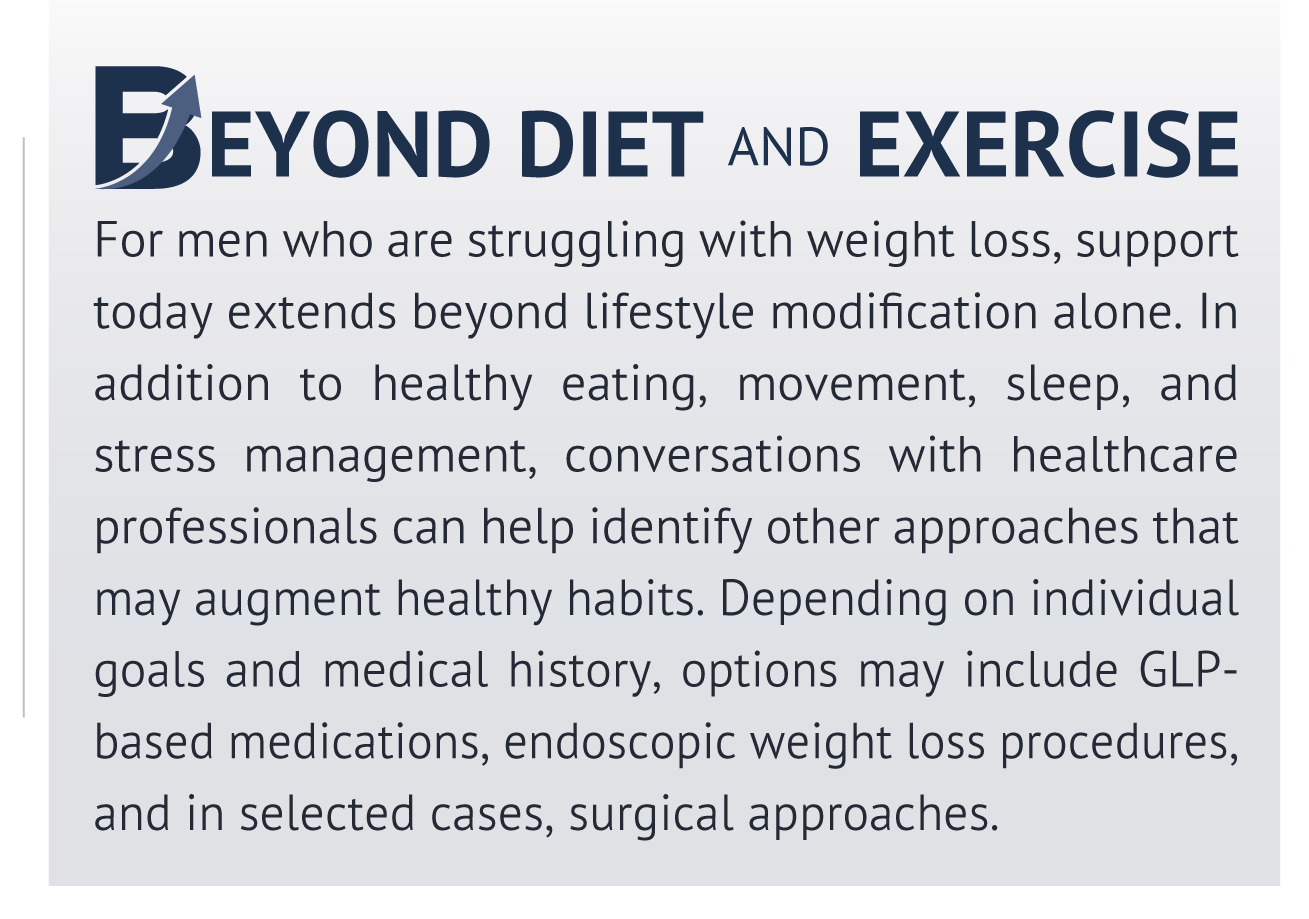
“Stop treating your health as something you’ll get to eventually,” he said.
“Your body is not a machine you can ignore until it breaks down and then hand off to someone to fix. It is the only home you will ever truly live in. Tend to it — not out of fear, but out of respect for the life you want to have, and the people who need you in it.”
Get screened. Move. Eat well. Sleep. Connect with people. And when something doesn’t feel right, go find out what it is.
Ask the Expert: Dr. Adam Kaplan, Urologist
Men’s Health Month is an opportunity to encourage open conversations about health concerns that are too often delayed, dismissed, or simply left unspoken.
Dr. Adam Kaplan is a board-certified urologist and fellowship-trained specialist in endourology and robotic surgery. He earned his medical degree and completed his residency training at the University of California, Irvine School of Medicine before completing a fellowship at Duke University.
As an active member of the Sonoma Valley Hospital medical staff, Dr. Kaplan cares for patients throughout Sonoma Valley, helping them navigate everything from urinary and prostate health concerns to the changes that naturally come with aging. His approach emphasizes prevention, early intervention, and creating a comfortable environment for conversations that can sometimes be difficult to start.
We asked Dr. Kaplan to share his perspective on men’s health, why so many men put off care, and what steps they can take to stay healthy and informed.
Can you tell us a little about your urology practice and the types of patients and concerns you most commonly see here in Sonoma?
I am a urologist with Providence Medical Group, and I care for patients throughout Sonoma County, including at Sonoma Valley Hospital. Urology is a broad specialty that focuses on the urinary tract in both men and women, as well as men’s reproductive health.
My practice includes everything from kidney stones and urinary symptoms to prostate enlargement, prostate cancer, kidney cancer, bladder cancer, and men’s health concerns such as sexual dysfunction and low testosterone. I have a particular focus on minimally invasive and robotic assisted surgery. Many patients come to see me for issues that can have a significant impact on their quality of life but may be difficult to talk about. One of the most rewarding parts of my job is helping people understand that these concerns are common, treatable, and worth addressing.
Men’s Health Month is a good reminder to check in on our health. From your perspective, what are some of the most important ways men can take a more proactive approach to their health?
The most important step is establishing a relationship with a primary care provider and not waiting until something is wrong to seek care. Preventive health screenings can identify many conditions before symptoms develop.
I encourage men to pay attention to a few key areas: maintaining a healthy weight, exercising regularly, getting adequate sleep, managing stress, and staying up to date on recommended screenings. For many men, that includes discussions about blood pressure, cholesterol, diabetes, colon cancer screening, and prostate health.
Men often prioritize work and family responsibilities ahead of their own health. Taking care of yourself is not selfish—it helps ensure that you can continue showing up for the people who depend on you.
Many men tend to wait until symptoms become disruptive before seeking care. Why do you think that happens, and what would you say to someone putting off an appointment?
I think many men are conditioned to push through discomfort or assume that symptoms are simply part of getting older. Others may feel embarrassed or worry about what they might hear.
The reality is that most medical issues are easier to evaluate and treat when addressed early. Delaying care can sometimes mean living with symptoms longer than necessary or allowing a condition to progress.
My advice is simple: if something feels different, bring it up. It doesn’t mean there’s something seriously wrong, but it does mean it’s worth a conversation. Most patients tell me afterward that they wish they had come in sooner.
What symptoms or changes should men stop ignoring and bring up with their doctor sooner rather than later?
There are several symptoms that deserve attention.
Blood in the urine should never be ignored, even if it only happens once. Persistent urinary symptoms such as difficulty urinating, a weak stream, frequent nighttime urination, or a sudden change in bladder habits are also worth discussing.
Men should seek evaluation for recurrent urinary tract infections, kidney stone symptoms, testicular pain or swelling, and any new lump or mass in the testicle. Changes in sexual function can also provide important clues about overall health and should not be viewed as something men simply have to accept.
In general, if a symptom is persistent, worsening, or affecting your quality of life, it’s time to talk with your doctor.
Some health conversations can feel uncomfortable, whether they relate to urinary, sexual, or emotional wellbeing. How do you help patients feel comfortable speaking up, and what would you say to someone who is hesitant to start that conversation?
I remind patients that there is very little they can tell me that I haven’t heard before. These are conversations I have every day, and my goal is to create an environment where people feel comfortable being honest about what’s going on.
Many patients are relieved once they realize that the symptoms they’re experiencing are common and that there may be effective treatment options available. The most important thing is simply starting the conversation. You don’t need to know the medical terminology or have all the answers. Just tell your doctor what you’re experiencing and how it’s affecting your life.
Healthcare works best when patients feel empowered to ask questions and advocate for themselves.
You care for patients at Sonoma Valley Hospital and in the community. What do you enjoy most about practicing medicine in Sonoma?
Sonoma is a special community. I enjoy building long-term relationships with patients, seeing my patients at little league games or on the plaza, and having the opportunity to care for multiple generations of families. IThere is a strong sense of connection here, and people genuinely care about their neighbors and community.
I also appreciate the collaborative nature of healthcare in Sonoma. We work closely with primary care physicians, specialists, and hospital staff to provide coordinated care close to home. It’s rewarding to help patients receive high-quality care while remaining connected to the community where they live and work.
Community Partnership Spotlight: ADOBE DRUGS
Working Together for Better Health Care
Some of the best partnerships grow naturally. The relationship between Sonoma Valley Hospital and Adobe Drugs began during the COVID-19 pandemic, when local organizations came together to support community vaccination efforts. Adobe Drugs owner and pharmacist Aman Bhullar and his team worked alongside hospital staff to help prepare vaccine doses and support drive-through vaccination clinics at Sonoma Valley High School.
What started as a community response to a public health challenge has grown into an ongoing partnership focused on making healthcare easier and more accessible for local patients.
Over the years, Sonoma Valley Hospital and Adobe Drugs have collaborated on several initiatives, including prescription benefit programs for hospital employees and, more recently, a Meds-to-Beds program designed to help patients transition safely from hospital to home.
Through the program, eligible patients can have their prescriptions filled and delivered before they leave the hospital whenever possible. If medications can’t be provided before discharge, Adobe Drugs can often provide quick turnaround and local home delivery.
For patients and families, it removes one more thing to worry about during an already stressful time.
“Rather than arranging a trip to a pharmacy, this step is taken care of for the patient, allowing the patient to focus on other things,” said Chris Kutza, PharmD, Director of Pharmacy at Sonoma Valley Hospital.
Kutza says the partnership is a great example of how local organizations can work together to improve continuity of care and better serve the community.
In a small town like Sonoma, those relationships matter. Hospitals, pharmacies, businesses, and community organizations all play a role in supporting the health of local residents. By working together, Sonoma Valley Hospital and Adobe Drugs are helping ensure patients receive timely, personalized care close to home.
Staying Active Matters: Advanced Joint Care Close to Home
 As Dr. Patrick Okolo notes in this month’s feature, staying active is one of the most important investments we can make in our long-term health. But for many people, chronic knee or hip pain can make it difficult to enjoy the activities they love.
At Sonoma Valley Hospital, patients have access to ROSA® Robotic Technology, an advanced tool that helps specially trained surgeons personalize total joint replacement procedures based on each patient’s unique anatomy. Combined with expert surgical care, physical therapy, patient education, and support from a dedicated Nurse Navigator, the Total Joint Replacement Program is designed to help patients reduce pain, recover successfully, and return to active living. Because getting older shouldn’t mean giving up the activities that keep you moving.
To learn more, speak with your provider.
💛 The “My Hospital” Campaign: Your Stories Matter
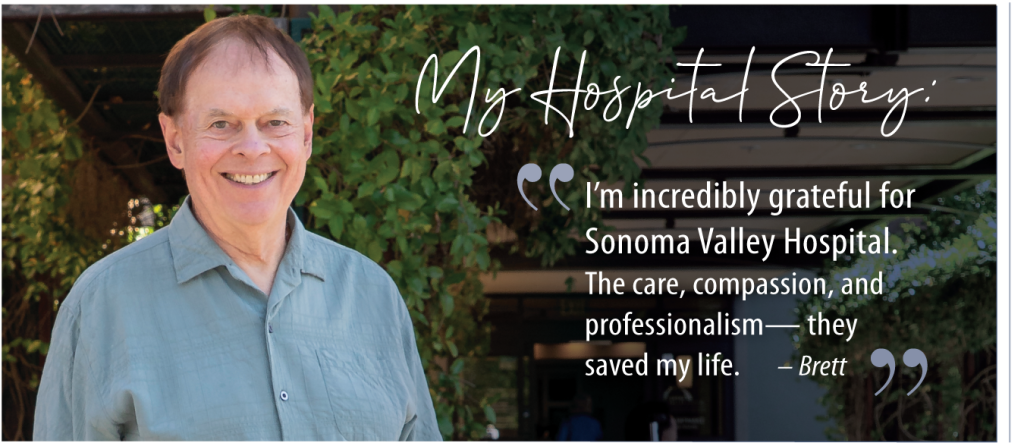 This month, meet Brett.
Brett Newman is active, healthy, and a familiar face around Sonoma Valley. So when he woke up one morning feeling unwell, neither he nor his wife Jeanette expected they were facing a life-threatening medical emergency.
At Sonoma Valley Hospital, Dr. Robert Zimmerman quickly began evaluating Brett. Initial tests appeared normal, but when Brett mentioned additional symptoms, Dr. Zimmerman trusted his instincts and ordered a CT scan.
That decision led to the diagnosis of a rare and deadly aortic dissection—and set in motion a rapid response that saved Brett’s life.
Read the full story on the Hospital Foundation website.
Explore Our New Website
 There’s a lot happening at Sonoma Valley Hospital, and our new website makes it easier than ever to stay connected. Along with updated information about our services, providers, and programs, you’ll find photos and stories that reflect what makes Sonoma Valley Hospital special: the people, patients, volunteers, physicians, and staff who make up our community.
The new site is easier to navigate, making it simpler to find the information you need, whether you’re looking for a physician, scheduling information, hospital services, or the latest news and updates.
Take a look and explore all that’s happening at Sonoma Valley Hospital.